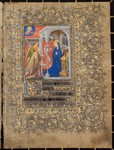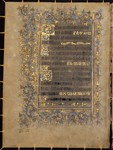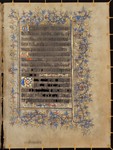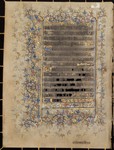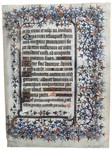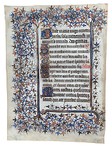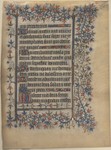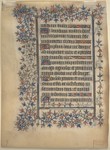
Linking fragments of the Chester Beatty Hours – Fragment
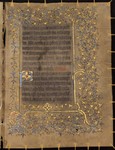
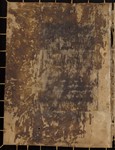
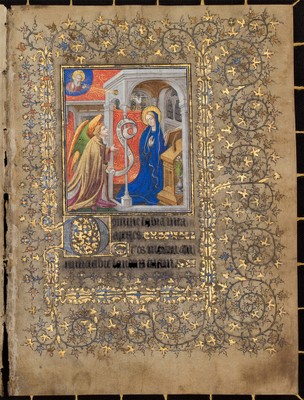
Parchment · Multiple fragments · 1405 – 1408 CE · Paris, France · 125 x 180 mmF-4tau
[sine loco], codices restituti

Image Rights

How to quote
Scholarly descriptions
-
Rose Faunce, 2019
Show description
Related Documents
- F-g7so: Sydney, Ian Jack Collection, f. 47 (Fragment)
- F-d0ut: Melbourne, The University of Melbourne Library, SpC/RB 61AA/3, ff. 1, 8, 179, 180, 181, 183, 184,185 (Fragment)
- F-4cvk: Princeton, NJ, Princeton University Art Museum, y1979-39, y1979-40, y1979-41, y1979-42, y1979-43, 69, 83, 159, 164, 167 (Fragment)
- F-hu71: Princeton, NJ, Princeton University Art Museum, y1979-42, f. 164 (Fragment)
- F-pcc1: Princeton, NJ, Princeton University Art Museum, y1979-40, f. 83 (Fragment)
- F-r6wt: Princeton, NJ, Princeton University Art Museum, y1979-43, f. 167 (Fragment)
- F-axba: Dunedin, Dunedin Public Library, RMM Fragment 17, ff. 136, 146, 149 (Fragment)
Participating Libraries
Dunedin, Dunedin Public Library · Melbourne, The University of Melbourne Library · Princeton, NJ, Princeton University Art Museum · Sydney, Ian Jack Collection · [sine loco], codices restitutiTranscriptions
-
Available - refer to the individual record of each fragment
This document is part of the following projects:
Persons
Summary
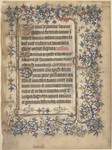
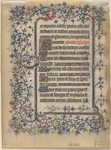
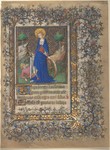
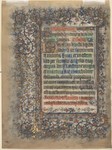
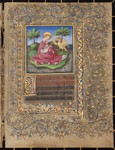
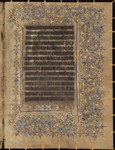
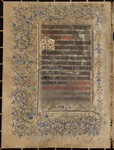
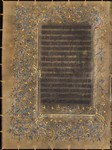
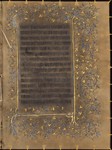
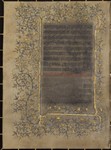
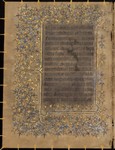
The manuscript is one of the few securely dated Books of Hours. The date 1408 is recorded in the colophon (f. 158v), now preserved in the Chester Beatty Library, Dublin. The scribe wrote Factum est anno mo cccco viijo quo ceciderunt pontes parisius [Made in the year 1408, when the bridges of Paris collapsed]. This refers to the exceptionally severe winter of 1407-08, when flooding of the Seine caused three of the city’s principal bridges – the Petit Pont, the Grand Pont and the Pont Neuf – to collapse and be swept away.
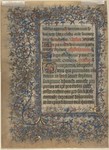
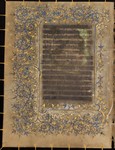
Provenance: The earliest documented record of the manuscript appears in the sale catalogue of the collection of Sir John Boykett Jarman (1782-1864), auctioned by Sotheby, Wilkinson & Hodge, 13-14 June 1864. The catalogue description (lot 47) claimed that the Book of Hours was "undoubtedly the Prayer Book of the King of France" because its binding displayed his arms. Jarman had owned the manuscript since at least 1846, when it, together with other books in his collection, sustained water damage after his house was flooded during a severe storm. Traces of the damage are visible on the Dunedin leaves.
At the Jarman sale, the manuscript was purchased for £13 15s by the publisher Edward Arnold (1857-1942). It remained in his collection until it was sold at Sotheby's on 6 May 1929 (lot 240). The manuscript subsequently passed to the Oxford booksellers Chaundy and was acquired later that year by Sir Alfred Chester Beatty (1875-1968).
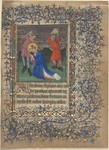
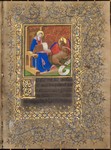
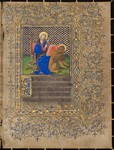
Beatty dismantled the manuscript, removing and mounting many of the 28 leaves holding miniatures. He retained a number for his collection, presented three to Harold K. Hochschild (1892-1981) in 1931, and consigned six to Sotheby's, where they were cold on 22 March 1932 (lots 322-327). Following Beatty’s death, the remaining miniatures and other leaves were sold at Sotheby's on 24 June 1969 (lots 58A-58K). The majority were purchased by English book dealers Alan G. Thomas and Folio Fine Art Ltd and subsequently dispersed to collectors and institutions around the world.
Summary Author